Thursday, December 29, 2022

Why Should You Choose Invisalign?

 Invisalign is better because they have many benefits that only an Invisalign treatment can give and shows th effective results in 12 to 18 months. Many people think that only braces can straighten teeth. These invisible aligners move your teeth slowly and straighten them; the treatment is much more comfortable than traditional braces. So if you are avoiding the treatment because of those metal wires, here is a solution that can help you.


So if you're considering getting braces instead of Invisalign, check out these six reasons why you may want to choose Invisalign.

Easier to Clean

The first benefit is that you can clean the Invisalign easily; you can remove the trays and clean them. When the food gets stuck in an area that is hard to clean, it can cause poor dental hygiene.


But Invisalign aligners are easy to remove from the mouth and clean them. Don't worry about flossing or brushing in between brackets and wires in braces because Invisalign is completely removable. This way, you can protect your teeth from poor hygiene.
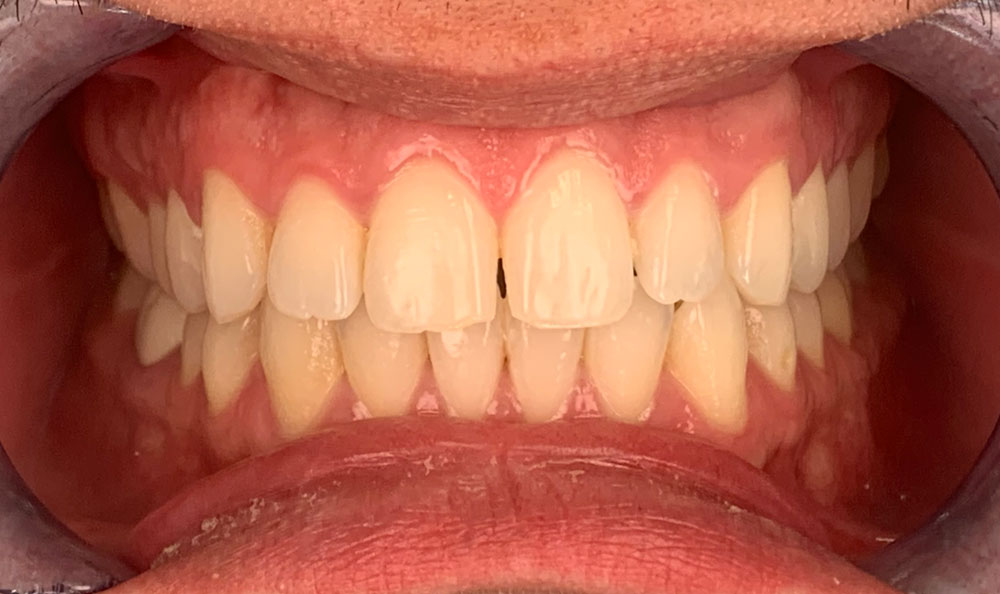
No Food Restrictions

When you have braces, your emergency dentist care near me will instruct you to eat many foods to avoid chewing hard candies or food that can stick to your teeth and wires. But not everyone can stay upto the instructions and end up damaging the wires or brackets. But when you choose Invisalign, you dont have to worry about the food; you can eat your favorite food as they are easy to remove.

More Comfortable

With Invisalign, you can be more comfortable, as installing any appliance in your mouth takes time to get used to it. But with Invisalign, you don't have to get used to it as it is already comfortable. No sharp edges and no tightening of the brackets in each visit to your Invisalign dentist near me.

Nearly Invisible

Compared to braces, Invisalign is less visible or almost not visible until you tell someone about it. When you smile, you can smile loudly without the embracement of braces being shown. Invisalign clear aligners are made of clear plastic, so they are nearly visible when you smile or talk.

Fewer visits to the Orthodontist

A person wearing braces has to visit the dentist frequently to tighten the wires when they are straightening their teeth. The dentist pulls the wires in each visit to make the treatment successful. On the other hand, Invisalign does not need regular visits to the dentist. The dentist will provide you with multiple sets of Invisalign to change them; you can put them simply on your own.


Although still for routine checkups, you have to visit your Aetna dentist near me. To check on the progress every 4 to 8 weeks. But they usually are less often than tightening appointments for braces.

No Discoloration

With braces, some patients experience discoloration in the bracket area, but with Invisalign, there is no such discoloration problem. Discoloration usually happens when you consume a lot of sugar, coffee, or other staining foods. You can avoid staining by using Invisalign.
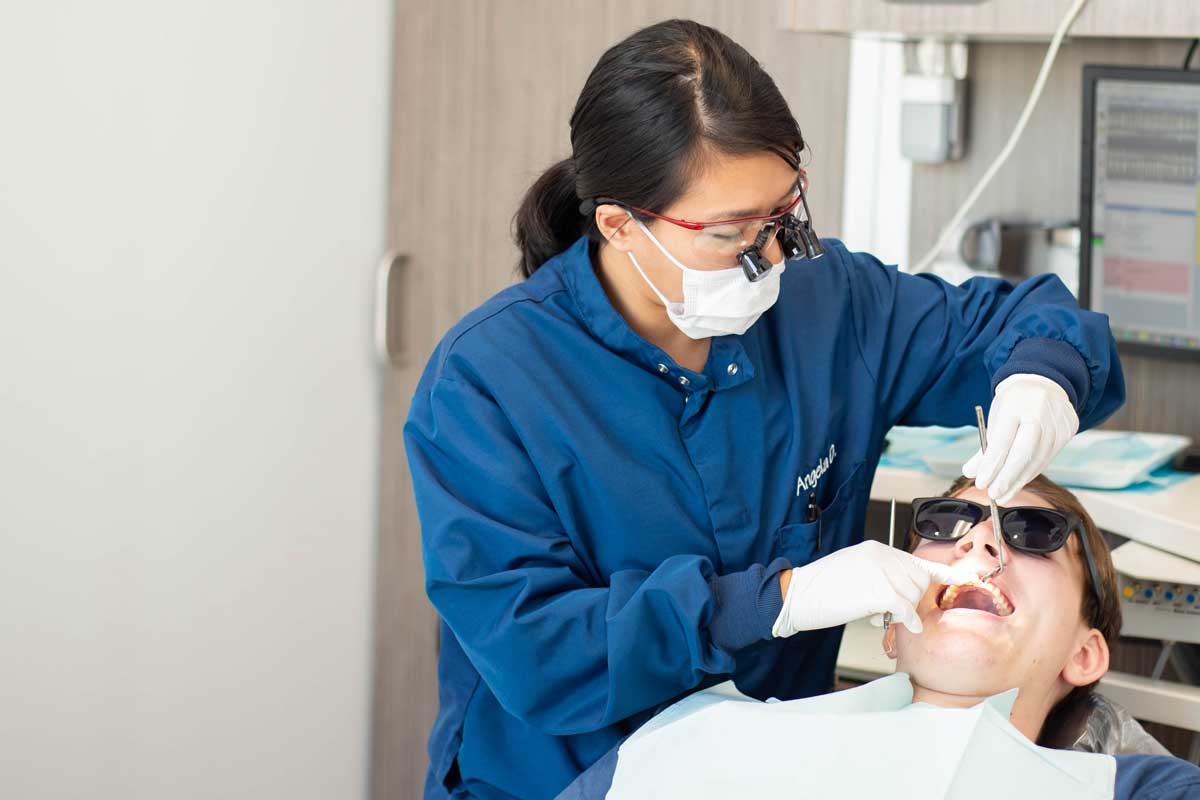
Less Bulky

Braces feel bulky, with brackets and bands around the teeth and irritating metal wires that can sometimes hurt inside the mouth. Invisalign aligners are easy and comfortable to handle. They are less bulky, do not irritate your gums, and Invisalign puts pressure on the teeth to move them slightly back to their original position. There might be discomfort for 1 or 2 days, but you will be comfortable soon.


In Conclusion:

If you are considering Invisalign, schedule an Appointment Today and relish the benefits of Invisalign. If you are interested in getting Invisalign or any of our other orthodontics services, call or contact dentists near me delta dental online to schedule an appointment Today.


Article Source : https://www.articleapprove.com/why-should-you-choose-invisalign/

Tuesday, December 20, 2022

Why Do Dentists Remove Wisdom Teeth?

 Wisdom Teeth Removal is oral surgery to remove wisdom teeth. But it's only sometimes necessary.


Preventative efforts


Even yet, the absence of pain from your wisdom teeth does not imply that there is no issue. There may be impacted wisdom teeth that cannot enter your mouth through your jaw. The teeth can grow at an angle to other teeth, or your mouth may need more room for them. By pressing on it, they risk breaking the teeth next door. To avoid issues later, some dentists remove healthy molars. The bones in your mouth become harder as you age, and as a result, they are tougher to remove.


What causes wisdom tooth removal?


Wisdom teeth need to be removed when they create issues or when X-rays show they could cause trouble in the future. Other justifications for wisdom tooth removal near me include the following:


  • Damage to other teeth: Having an extra set of molars can force your other teeth into an uncomfortable position and affect your bite.
  • Jaw damage: Cysts may develop around newly erupted teeth. They can hollow out your jaw and harm nerves if not treated.
  • Problems with wisdom teeth can cause pain, pressure, and congestion in the sinuses.
  • Gums that are inflamed: The surrounding tissue may expand and be challenging to clean.
  • Cavities: Swollen gums can form spaces between teeth, which encourage bacterial growth and the development of cavities.


What kind of anesthesia you'll receive during wisdom teeth removal surgery?


According to emergency dental near me, Your procedure should last no more than 45 minutes. To prevent pain while the removal is being done, you will get one of the following types of anesthesia:


Local


Your dentist who does wisdom tooth extraction near me will give you a shot of a local anesthetic such as novocaine, lidocaine, or mepivacaine to numb your mouth. Gaining consciousness or passing out during surgery can also make you inhale nitrous oxide, a laughing gas. Soon after, you should start feeling alert once again.


IV sedation


The surgeon will numb your mouth and use medications to make you sleepy through a vein in your arm. You might fall asleep throughout the process.


General


You'll either breathe in laughing gas with a mask or get medicines injected into a vein. The surgery will keep you sleeping the entire time, and you might not awaken for a while.


What happens after the surgery?


Anesthesia affects people differently. You can drive home to start your recovery if you have a local anesthetic and feel awake. You can resume working or engage in your regular activities. You'll need a ride home if you underwent general anesthesia or still feel sleepy. After surgery, most patients experience minimal to no pain.


You'll probably experience swelling and minimal discomfort for three days or so. It could take a few weeks for your mouth to heal entirely. To recover more quickly, follow your doctor's recommendations.


Conclusion


The above-given information will tell you about wisdom teeth removal. It also highlights various informative and beneficial aspects regarding wisdom teeth removal. For more information, please visit dentisthoustontx.com.

Article Source : https://www.articleaffiliate.com/why-do-dentists-remove-wisdom-teeth/

Wednesday, December 14, 2022

What Do You Know About Gingivitis?

 According to an emergency dentist near me, a gum or gingiva irritation called gingivitis is often uncomfortable, and plaque accumulation on the teeth is often to blame. At some point in their lives, most adults will experience gingivitis, a common ailment. It is a gum disease, and its symptoms are usually not severe. Nevertheless, if the underlying reason is not addressed, it may worsen and become more serious.


Essential details concerning gingivitis include:


  • The most frequent cause of gingivitis is bacterial accumulation around the teeth.
  • You can characterize gingivitis by red, swollen gums that may bleed when you brush your teeth.
  • Regular flossing and longer, more frequent brushing are effective treatments for gingivitis.
  • An antibacterial mouthwash may also be beneficial.


Who can develop gingivitis?


Gum disease is highly typical. A form of gum disease affects nearly half of all persons over 30.


Gum disease is more prevalent in:


  • Men, yet scientists are unsure of the cause. Men are more prone to associated disorders than women, which may be related to hormones. Men also don't visit the emergency dental care dentist as frequently.
  • People who are uneducated beyond the high school level and those who are in poverty. Many diseases have links to these factors.
  • Smokers, as smoking, impair a person's body's ability to fight infection.


How do dentists diagnose and treat gingivitis?


Diagnosis


An oral dentist will look for symptoms like plaque and tartar in the mouth cavity. To look for gum disease symptoms, they could also request testing. You can do it via an X-ray or periodontal probing, which uses a tool that gauges the size of the pockets surrounding a tooth.


Treatment


An individual may be able to get Gingivitis Treatment at home with adequate oral hygiene if diagnosis occurs early and therapy is fast and appropriate. A dental professional could perform the initial scaling, and they do it to eliminate excess tartar and plaque. If there has been extensive tartar accumulation, this could be uncomfortable if the gums are sensitive.


Following a dental cleaning, the dentist who does gum disease treatment will educate the patient on the importance of oral hygiene and how to brush and floss their teeth properly. They might suggest setting up follow-up sessions to check on a person's plaque and tartar. Because of this, the cigna insurance dental specialist can spot and handle any recurrences quickly.


Maintaining dental hygiene also involves restoring any damaged teeth. In some dental disorders, such as crooked teeth, poorly fitted crowns, or bridges, plaque and tartar removal may be more difficult. They could also aggravate the gums.


How can we prevent gingivitis?


Maintaining proper oral hygiene can help you avoid gingivitis:


  • When you get up before bed, brush your teeth twice a day.
  • If you have diabetes, control it.
  • Do not use tobacco products or smoke.
  • Floss daily to get rid of the bacteria between your teeth.
  • Limit alcohol as well as foods and beverages that are high in sugar.
  • For checks, visit the dentist at least once a year, more frequently, if any symptoms arise.


Conclusion


The above-given information will help you learn some beneficial things regarding gingivitis. For more valuable details, please visit dentisthoustontx.com.

Article Source : https://www.bloggingpalace.com/what-do-you-know-about-gingivitis/

Wednesday, December 7, 2022

How Does Invisalign Work?

 Once they decide how to correct your bite, a dentist or orthodontist at the dentist office near me will create a plan for tooth movement. They will fit you for various clear aligner options that progressively adjust your teeth throughout treatment if you opt for them. They make them from clear plastic or acrylic and are snugly fitted over the teeth.


For eating, cleaning, and flossing, you can remove them. You will get a new set of transparent aligners every few weeks to keep moving your teeth in the desired direction. You can see the difference in your appearance through INVISALIGN BEFORE AND AFTER PICTURES.


How long does Invisalign take to align your teeth?


The amount of tooth movement or rotation it requires will determine how long treatment with invisible aligners will take. It will take longer if your bite is more irregular or if your teeth are more crooked. Typically, a course of treatment lasts 10 to 24 months. However, if you had braces as a child and are now an adult, and your teeth have moved somewhat over time, you may only need clear aligners for ten weeks. For best Invisalign results, you must wear the Invisalign aligners for 20 to 22 hours daily.


Can anyone get Invisalign teeth aligners?


The greatest candidates for invisible aligners are adults or teens because they are made particularly for a tight fit. A child's teeth require more work to straighten. The clinician must remember that young patients' mouths are still growing and developing when planning treatment.


Patients with mild to moderately crowded teeth or slight spacing concerns often utilize clear orthodontic aligners. Patients with significant crowding issues, spacing issues, underbites, overbites, or crossbites may require more advanced care in Invisalign before and after treatment.


How does wearing Invisalign aligners work?


You visit the dental office for Invisalign near me to check the fit and make any required modifications after we get your first set of aligners. Every day, except when you eat, floss, or brush your teeth, you will wear your aligners. You may take your Invisalign braces out for a moment whenever you need to throughout the day because they are detachable.


It's simple and seamless to wear Invisalign during your typical day. Clear braces will cover your teeth after you receive your aligners. After wearing each set of aligners for two weeks, you will move on to the next set. Because they make them to move your teeth gently and precisely, your aligners will initially fit snugly, and your teeth will gradually shift to a new place after a few days.


After some time, you will feel that your aligners are a little loose. Only switch them out later, even if they begin to feel loose. Put them on for the entire two weeks. It allows your teeth and gums to adapt to the new position. Switching aligners too soon will hamper your treatment strategy.


Conclusion


The above-given information will help you learn some beneficial information regarding Invisalign aligners. To learn more about Invisalign clear aligners, please visit dentisthoustontx.com.

Article Source : https://www.articleentry.com/how-does-invisalign-work/

Wednesday, November 30, 2022

What Would Dentures Do For You?

 A denture is a detachable restoration for the gums around lost teeth. Dentures come in complete and partial forms. Dentists use partial dentures when there are some remaining natural teeth. However, complete dentures are used when all the teeth have fallen out.


What type of dentures do dentists use?


Complete dentures


There are two types of complete dentures: instant and traditional. About eight to twelve weeks after removing the teeth and the gum tissue starts to heal, a conventional denture is prepared for use in the mouth. In contrast to traditional dentures near me, immediate dentures are ready in advance and can fit them as soon as dentists remove the teeth. As a result, the patient doesn't have to go without teeth while recovering.


Partial dentures


A dentist for dental emergency near me uses partial dentures when a patient still has some natural teeth intact, such as when one or more teeth are present in both the upper and lower jaws. A foundation with a pink color is linked to a metal component. These two components hold the denture in place in the mouth. Because they are convenient and detachable, you can take them off whenever necessary. The other teeth's movement is helped by partials, which are made entirely of acrylic or acrylic.


Immediate dentures


The primary difference between regular and immediate dentures is that the former is temporary. Unlike permanent dentures, which are fitted precisely to the mouth, immediate or same-day dentures are only sometimes snugly fitting. On the same day, They'll give you immediate dentures to put in your mouth after removing the teeth. For the initial few months following extraction, you will wear them. You will have teeth in this fashion while you wait for the arrival of permanent dentures.


Implant-supported dentures


The combination of dental implants and dentures is implant-supported dentures. These tools combine these two cutting-edge prosthetics. Four to six implants, often titanium screws, will be surgically inserted into the patient's jawbone during the installation of these dentures by an oral surgeon. After that, the patient's jawbone tissue and the screws are given adequate time to fuse. Typically, this requires three to six months. Osteointegration is the name for this process.


Will dentures change your look?


Since they create dentures to resemble your actual teeth closely, there shouldn't be much of a visual difference. Dentures might make you grin wider and look more youthful. You can take pictures before and after partial dentures to see the difference in your appearance.


What does it feel like to have new dentures?


Before your cheek and tongue muscles grow used to holding them in place and you feel comfortable putting them in and pulling them out, new dentures may feel weird or loose for a few weeks. Saliva production may increase when you first put on dentures, and there may be irritation or soreness. However, these problems will fade as your mouth adjusts to them.


Conclusion


The above-given information tells us about the different types and benefits of dentures. For more valuable information, please visit dentisthoustontx.com.

Article Source : https://www.spiceupblogging.com/what-would-dentures-do-for-you/


Monday, November 21, 2022

How Would Doctors Diagnose Sleep Apnea?

 Your Cigna Dental PPO doctor may base their assessment on your signs and symptoms and your sleep history, which you can provide with assistance from someone who shares your bed or house. It'd be best to visit a sleep disorder clinic; a sleep specialist can help determine whether you need more testing. During an evaluation, a sleep center will frequently monitor your breathing and other bodily functions while you sleep. There is also an option for sleep testing at home.


What are the tests to diagnose sleep apnea?


Nocturnal polysomnography.


Throughout this test, equipment monitors your blood oxygen levels, breathing patterns, and heart, lungs, and brain activity as you sleep. It also records your arm and leg movements.


Home sleep testing


A dentist near me could prescribe quick tests for you at home to detect sleep apnea. Your blood oxygen level, airflow, and breathing patterns are frequently examined during these assessments.

121.jpg


If the results are abnormal, dentists open Saturdays may be able to advise a therapy without performing any additional testing. But even if your preliminary results are normal, your doctor can still suggest polysomnography because portable monitoring devices don't always detect sleep apnea cases.


What treatment options are for sleep apnea?


Your doctor might advise making lifestyle changes, such as stopping smoking or decreasing weight, for milder sleep apnea. Your doctor will suggest allergy treatment if you have nasal allergies. Numerous other therapies are available if these steps aren't effective on your signs and symptoms or if your sleep apnea is moderate to severe. A few tools can aid in clearing a clogged airway, and other situations can call for surgery.


 sleep apnea treatment options may include:


Continuous positive airway pressure (CPAP).


If you suffer from moderate to severe sleep apnea, using a machine that pushes air pressure via a mask while you sleep may be beneficial. With CPAP (SEE-pap), the air pressure is enough to keep your upper airway's passageways open, preventing apnea and snoring. It is slightly higher than the air pressure in the room.


Adaptive servo-ventilation (ASV).


This more current airflow device that has been approved learns your typical breathing pattern and keeps the data in an integrated computer. After you fall asleep, the device applies pressure to convert your breathing pattern to normal and stop breathing pauses.


For some persons, ASV appears to be a more effective treatment for complex sleep apnea than other types of positive airway pressure.


Other airway pressure devices.


If using a CPAP machine still bothers you, you could use another airway pressure device that automatically changes the pressure while sleeping (auto-CPAP). Some devices deliver BPAP or bilevel-positive airway pressure.

122.jpg


Treatment for associated medical problems.


According to Dental Clinic near me, treating cardiac or neuromuscular issues, which are potential causes of central sleep apnea, may be helpful.


Supplemental oxygen


Using more oxygen while you sleep may be beneficial if you have central sleep apnea. Devices that supply oxygen to your lungs come in a variety of types.


Conclusion


We hope the above-provided information will give you valuable information regarding sleep apnea and its treatment. For more details, please visit dentisthoustontx.com.

Article Source : https://www.hugotips.com/how-would-doctors-diagnose-sleep-apnea/

Tuesday, November 15, 2022

What is the Main Treatment in Cosmetic Dentistry?

 Cosmetic dentistry is a therapy of professional dental care mainly focusing on improving your smile. Moreover, cosmetic dentistry is an elective procedure, not compulsory; however, some cosmetic dentistry treatments provide restorative benefits. You should know about the main cosmetic dentistry treatments such as:

Inlays and Onlays

Inlays and outlays treatment, also known as an indirect filling, is made by a dental laboratory. A dentist near me uses this treatment when you have a mild to moderate teeth cavity, and tooth cavities can support a filling. Also, your tooth cusps have no damage, and the inlays are directly put onto the tooth surface.

Inlays and outlays are fabricated in dental laboratories; initially, they are made of gold but later on, composite of porcelain or ceramic material are attached to the teeth with dental cement. They also strengthen your teeth and their structure and avoid further decay to your teeth.

Composite Bonding

Composite bonding refers to the restoration of decayed, damaged, or stained teeth using teeth' enamel color material.

The dentist office near me, trims the decayed part of your teeth, applies the compost material on the tooth's surface, and then shapes it into proper teeth by using UV rays to fasten the bonding procedure. This procedure covers damaged parts and gives like-a healthy teeth.

If you are suffering from cracked, knocked, or worn-down edges, you should consider having composite dental bonding; also, it is one of the least expensive cosmetic procedures. Contact Dental Clinic near me for composite bonding.

Dental Veneers

Dental veneers are custom-made thin shells that cover your naturally damaged teeth. They also look realistic and resolve problems like cracked or damaged teeth, enamel or noticeable gaps between teeth, or stained teeth. A dentist applies the veneer shells to the front of your every tooth with the help of dental cement.

Teeth Whitening

Teeth whitening is one of the most widespread cosmetics dentistry. It can be performed at home or by a celebrity dental implants before and after, which takes one visit. In this procedure, your dentist will remove plaque, tartar, and food particles from each tooth and restore its natural appearance.

Later they apply a bleaching agent to achieve a whiter teeth shade than its original color. Over time, consuming food, medication, drink, and personal habits like smoking or wine stains your teeth. Additional patients can use whitening toothpaste to achieve the objective in a few weeks.

Implants

Dental implants are used to replace damaged or missing teeth. In this procedure, your dentist inserts a titanium screw inside your jaw of missing teeth to support a dental crown. These crowns are the same teeth-like and permanent screw into a tooth. Once your teeth start fusing to the implants, they get permanently secured.

Conclusion

If you are a candidate for cosmetic dentistry treatment, you should consider visiting a celebrity dentist for proper treatment. Also, they will help you by providing more guidance on which treatment is best for you.

 Article Source : https://www.bloggingbeep.com/what-is-the-main-treatment-in-cosmetic-dentistry/

Is Invisalign A Better Option For Children?

  Many people prefer Invisalign over braces as they match the color of the teeth flawlessly. Suppose you have crooked, crowded, or misaligne...